

June 22, 2026
Key Takeaways
- You don’t need to be fluent in Mandarin to guide your child’s progress and help them learn Chinese at home.
- Small, everyday habits at home make learning a second language more natural and approachable.
- Invest in language learning resources like storybooks, flashcards, and apps.
- Parents can learn alongside their children and model positive learning attitudes.
- A balance of home support and professional guidance builds long-term confidence.
Simple Ways to Support Chinese Learning at Home
For parents in Singapore who mostly speak English at home, supporting their child’s Mandarin journey can feel challenging. But creating a positive environment doesn’t depend on fluency—it depends on consistency, encouragement, and exposure.
Here are a few simple strategies to help your child steadily learn Chinese at home and strengthen their ability to use it both in schoolwork and daily interactions.
1. Use Simple Mandarin in Daily Routines
Children learn best when language becomes part of their everyday lives. Start with simple, useful phrases like “早安” (good morning) or “吃饭了” (time to eat). Weaving these words into your daily routines helps normalise the presence of Mandarin in your home. Over time, your child will start to associate the phrases with actions, making them easier to remember and apply. It’s a simple but powerful way to help kids learn Mandarin in a natural, stress-free setting.
2. Learn Alongside Your Child
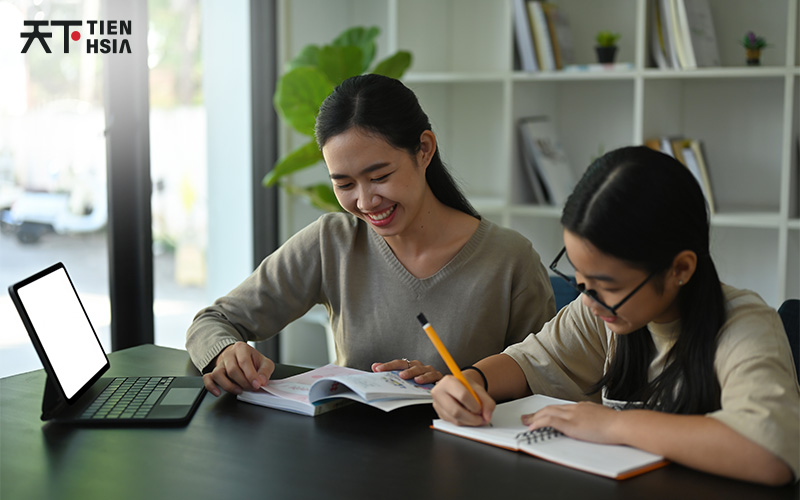
Children are more motivated when they see their parents learning with them. For many non-Chinese-speaking parents, joining in may feel intimidating at first, but your effort matters more than perfect tones or grammar. Review vocabulary together by turning it into a mini quiz, sing along to nursery rhymes or theme songs from Chinese cartoons, or keep a word wall at home where you both add new phrases each week.
This shared journey not only helps your child learn Chinese at home but also shows that language learning is meaningful at any age. When children see you making the effort too, they’re more likely to stay engaged and consistent.
3. Encourage Speaking Without Fearing Mistakes
Many children hesitate to speak Mandarin because they’re afraid of saying the wrong thing. But in Singapore, there are plenty of everyday opportunities for practice that don’t have to feel like lessons. Parents can also make it easier by creating a safe environment where every attempt counts.
Instead of correcting too quickly, acknowledge the effort, whether your child greets their grandparents or orders their food at the hawker centre in Mandarin. Celebrate these small wins and remind them that mistakes are part of learning. This will help them steadily learn Chinese at home without wearing down their self-confidence.
4. Use Bilingual Resources
Not all parents feel confident explaining Chinese words on their own, and that’s completely fine! Bilingual resources such as picture books, flashcards, or mobile apps with both Mandarin and English can help bridge the gap. These tools allow children to explore independently while still allowing you to be involved.
When it comes to Chinese for preschoolers, colourful storybooks, nursery rhymes, and interactive games are especially effective in making lessons fun and easy to absorb. These materials turn learning into play and help support your child’s early exposure to a second language.
5. Enrol in a Structured Chinese Programme
Creating opportunities at home is a great start, but children also benefit from a consistent learning environment guided by experienced teachers. Enrolling your child in a trusted Chinese tuition centre in Singapore allows them to benefit from structured lessons that strengthen reading, writing, and speaking skills.
For younger learners, enrichment classes spark interest and lay early foundations, while primary Chinese tuition helps older students manage their schoolwork and prepare for exams. When combined with your efforts to help your kids learn Mandarin at home, these lessons give them the balance of support and expertise they need to progress with confidence.
Your Role in Helping Children Master Chinese
Raising a bilingual child is a team effort, but you don’t have to be fluent to make an impact. By using everyday phrases in Mandarin, providing a supportive space, and turning to comprehensive resources, you give your child meaningful ways to learn Chinese at home. Pairing these strategies with expert guidance from a trusted enrichment programme ensures your child gets the best of both worlds: consistent support at home and structured learning outside.
At Tien Hsia Language School, learning Mandarin goes beyond textbooks. Our Chinese enrichment classes combine reading and writing with lively, hands-on activities that engage sight, hearing, and touch. As a school registered with the Ministry of Education (MOE), we uphold high standards while making lessons memorable and enjoyable for every child.
Experience our approach firsthand—arrange a free trial lesson today.