

June 2, 2026
Key Takeaways
- Many children understand Chinese but may hesitate to speak due to a limited vocabulary or low confidence.
- Creating a supportive environment at home and in class can help improve your child’s Chinese speaking skills.
- Practical strategies, like picture prompts, sentence starters, and gentle correction, make Chinese oral practice less intimidating.
- Structured enrichment programmes and consistent practice prepare children for long-term success in both school and daily life.
Helping Your Child Find Their Voice in Chinese
For many primary school children in Singapore, Chinese is a language they understand but rarely use in daily conversations. While they may recognise words and phrases, speaking Mandarin fluently often feels like a challenge. This gap stems from a mix of limited vocabulary, lack of confidence, or simply not having enough chances to practise.
The good news? Fluency can be built step by step with the right strategies. Here are some essential tips to help your child gradually improve their Chinese speaking skills while nurturing confidence along the way.
1. Use Picture Prompts to Spark Conversation
Children respond well to visuals, which makes picture prompts a simple yet effective way to get them talking. Instead of asking quick yes-or-no questions, show your child a photo, illustration, or scene from their favourite show and encourage them to describe it. You can ask things like:
- “What is this boy doing at the park?” “这个男孩在公园里做什么?”
- “Why do you think the girl looks happy?” “你觉得这个女孩为什么看起来很开心?”
- “What could happen next in the next scene?” “接下来可能会发生什么事?”
Prompts like these invite your child to form full sentences, add details, and practise new vocabulary. Over time, this turns short replies into richer conversations, helping them improve their Chinese speaking abilities in a natural way.
2. Use Sentence Starters to Build Longer Responses
Children often default to one-word answers when they don’t know how to extend their replies. Teaching them simple sentence starters like “我觉得…” (“I think”) or “这让我想到…” (“This reminds me of”) gives them a framework to express fuller thoughts.
For instance, if you ask about a picture of children at the playground, instead of saying just “playing”, your child could respond with, “I think they are playing on the swings because it looks fun.” With regular practice, these structures help your child lengthen their responses, making their Chinese sound more fluent and confident.
3. Attend Chinese Enrichment Classes That Focus on Speaking
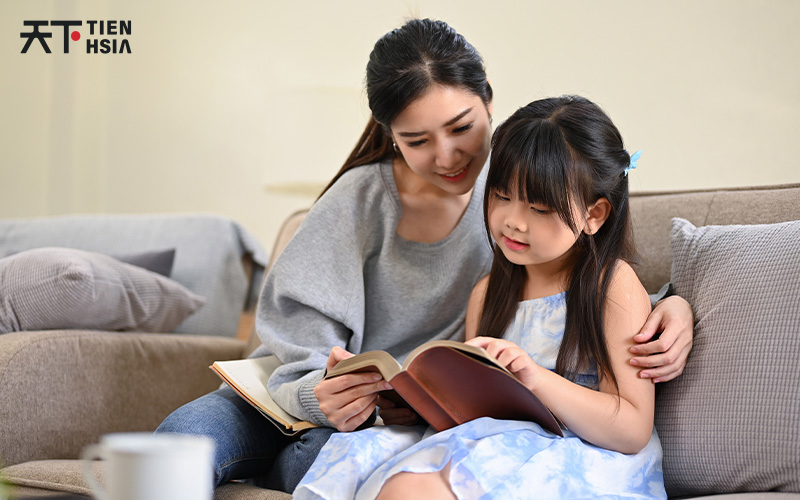
Home practice is important, but children often need a space where speaking Chinese feels natural and is encouraged. That’s where enrichment classes come in. Choose a primary Chinese tuition class that gives children a chance to practise conversations, refine pronunciation, and work with their peers in a supportive setting.
At Tien Hsia Language School, our P1 Chinese enrichment programme includes Show and Tell sessions at least once or twice a term. These give students the chance to practise public speaking and present in Mandarin, whether it’s describing a favourite toy or sharing about a weekend activity. This enables children to not only improve their Chinese speaking skills but also build the confidence to speak up, overcome stage fright, and enjoy using Mandarin in everyday life.
4. Correct Gently and Recast Their Sentences
It’s natural for children to make mistakes when speaking a language. However, what matters most is how those mistakes are handled. Instead of correcting them mid-sentence, it’s important to let your child finish speaking before gently repeating the correct version back at them.
For example, if your child says “我洗手先,才吃饭“, you can recast it as “我先洗手,才吃饭” and encourage them to try again. This method corrects errors without breaking their confidence, while reinforcing proper grammar and sentence structure. Making these small adjustments will go a long way in helping them grow more comfortable and improve their Chinese speaking abilities.
Building Confidence in Mandarin, One Step at a Time
 Helping your child improve their Chinese speaking skills doesn’t require overwhelming changes and rigorous revision schedules. It starts with small, consistent steps. From using picture prompts to enrolling your child in enrichment activities, these tips can help boost their confidence and provide effective oral preparation for both school and everyday communication.
At Tien Hsia Language School, every lesson is designed to help children gain the confidence to speak Mandarin naturally. Through interactive activities, guided practice, and a supportive classroom environment, we help students discover that Chinese is not just a subject but a language they can use with ease.
Curious about how we can support your child? Contact us to arrange a complimentary trial and see the difference for yourself.